Gwen Tuinman

Category

Uncategorized

A Little Book With Big Punch — The Unlikely Pilgrimage of Harold Fry

The Unlikely Pilgrimage of Harold Fry


Books with heft tend to draw my attention, the weightier the better. I suppose I’ve assumed a correlation between the number of pages and the satisfaction I will derive from reading them. When a friend shared her copy of The Unlikely Pilgrimage of Harold Fry, I agreed to give it a go.

I observed its small size, lifted its feather weight, and speculated as to its ability to keep me entertained. Well, dear reader, I stand corrected. Big things really do come in small packages.

Poor Old Harold

The journey with Harold is an enjoyable one notwithstanding the sorrows that plague his life. He is a sympathetic character who grew on me mile by mile. At 65 years of age, his career is finished, his wife sleeps in a separate room, and his only child is departed going on twenty years.  When he receives a life changing letter from a dying friend, he determines to walk the length of England to deliver a message to her in person.  Along the way, Harold tries to make sense of his life.

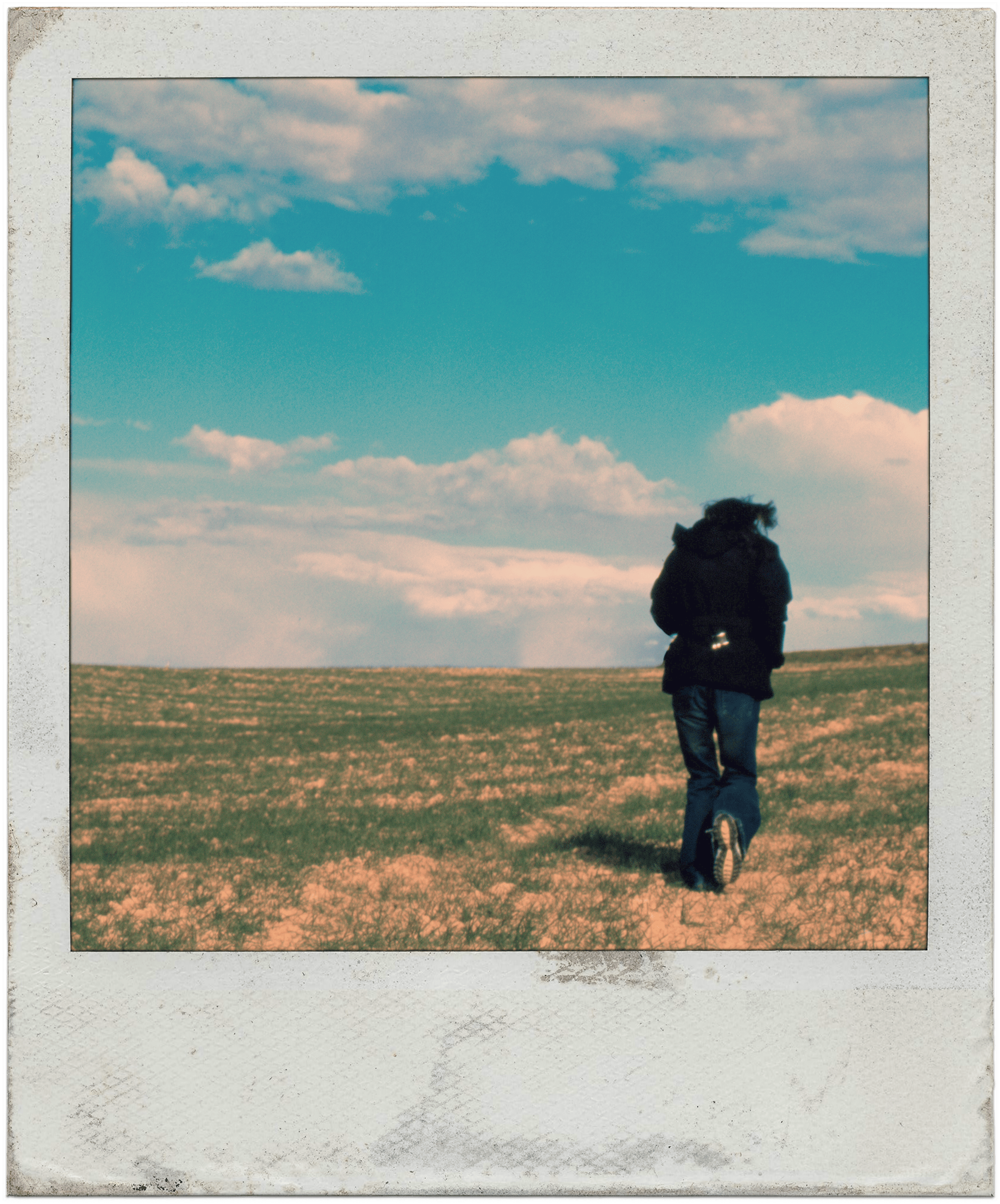
As Harold treks along, the memories visit more frequently and in more vivid detail. Walking becomes a meditative exercise, and long buried thoughts continue to surface. Many of us have unraveled a tangled issue by going for a walk .  Eureka moments of creativity or problem solving can surprise us as we speed along a sidewalk.

Harold’s wife, Maureen, takes a journey that is more cerebral in nature.  His absence allows her time to realize that she does indeed love him.  A satisfying change in attitude from a character who sees the glass half empty.

Just Good Fun

Harold Fry is the British Forrest Gump.  The goodness that he discovers in people delivers levity to the narrative.  He journeys town to town, sharing the purpose of his mission, garnering sympathy and encouragement along the way.  For a period of time, an assortment of quirky tagalongs merge into his pilgrimage, as they too search for meaning.  His story moves people in unexpected ways.  Much like Craigslist Joe, he lives on the kindness of others while he is on the road.

The Unlikely Pilgrimage of Harold Fry 4


Reflective Moments

As Harold walks, he experiences the gamut of human emotion; self-doubt, grief, frustration, hope, and trust. Both he and Maureen offer a retrospective on their life together and their journey through grief. Author Rachel Joyce keeps us guessing until the end.  What is Harold’s big secret?

In a few years, I plan to embark on my own pilgrimage through Spain.  Camino de Santiago, here I come!

Deck shoes and duct tape!

How do you shake out the cobwebs?  Do you take a walk?  Visit friends?

I’d love to hear from you.

Joseph Boyden and Michael Winter at the Uxbridge Musical Theatre

small gallery frame

Why will I forever laugh out loud at the sight of a pontoon plane? Why do you see Boyden  inside the front cover of my copy of The Orenda? 

The answer is simple.  Joseph Boyden and Michael Winter spoke at the Uxbridge Musical Theatre and I was there. 

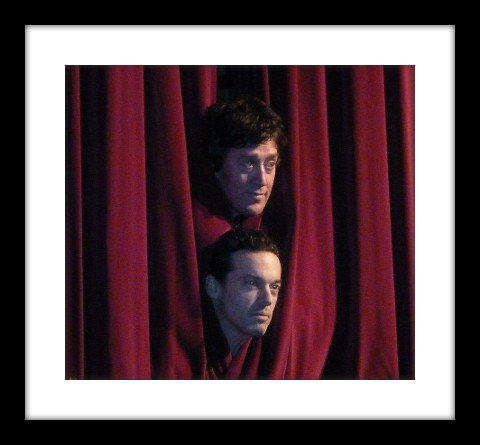
Ted Barris, host interviewer, referred to Boyden and Winter as a Vaudeville act. Right on cue, their heads poked through the center curtain.

The tone of the evening was set, a mix of serious discussion and levity.


Novel Readings

Joseph Boyden read a scene from The Orenda that began with Snowfall, a young Iroquois girl, blackening her face in an effort to intimidate the Huron village.  Snowfall soon experienced the mystical powers of Gosling, the shaman.  As he read about Gosling’s hand cupping snow and the images that emerged there, his own cupped hand hovered above the podium, mirroring her movements.

Boyden shared that Snowfall is his favourite of the characters he’s created thus far.  He is comfortable writing from the feminine point of view. Boyden commented that the women he writes about are usually right and the men are usually wrong, as in real life.  He laughed along with the audience here.  He referred to the Huron women bringing in the harvest and the auntie in Three Day Road keeping Xavier alive.

“I felt channeled through Snowfall.” – Boyden


P1010451 (227x350)

Michael Winter’s natural storytelling ability transformed the theatre into a Newfoundland kitchen party.  He’d just learned that a young Glen Gould played piano on the Uxbridge Musical Theatre stage years ago.

Winter shared an anecdote about how Gould had created a Newfoundland soundscape.  After countless failed attempts to capture the right wave sounds, Gould’s producer played a recording of Galapagos Island waves.  Gould was finally satisfied.  The wave track was included in the Newfoundland soundscape.  Winter read a soulful passage about Henry from Minister Without Portfolio.  This is a character who becomes an adult, fails at it, then tries again.

“Sometimes to make a thing seem more itself,

you have to make it something else.” – Winter


On the Importance of Detail

“I always go to the people with knowledge,” said Boyden. In the early days of his career, he felt shy to approach experts for information about their area of study, so he’d write a letter.  “I hope you don’t mind me bothering you, he’d write, but I’m working on this novel …”  He sought out elders, WW1 historians, engineers, and McGill professors.  “People with knowledge don’t hold it greedily,” he told the audience.  They want to share it, if you approach them properly.

Winter traveled to Afghanistan to experience the country he would write about. Interviewees who’d served abroad explained the experience in broad sweeps, so he asked them specific questions. Did you get thirsty often? How did you get home? What kind of plane brought you back? At first, people found these questions odd until they realized that the answers they shared were taking the shape of a narrative. “Detail brings the story to life.  Details are critical.”

twitter size (350x174)

Stylistic Choices

Although the first person present point of view is “tricky and exhausting” to keep up, Boyden said, “I love the immediacy of it.”  Referring to Three Day Road, Winter adds, “Rarely do you see a book that when you step back, you wonder if the book is a dream or real life. Joseph can “keep the airplane in the air for 300 pages”.  “He has the technical skills and he is a great story teller.”

  “Any good historical novel must ring true contemporarily, in some way.”  – Boyden


When asked why he doesn’t use quotations marks, Winter grinned. “I write with quotation marks, but when I finish, I sweep them into a small burlap bag I keep next to my desk. By recycling day, it can weigh up to five pounds!”  When the laughter subsided, he went on to explain that quotation marks are clunky.  They announce, “Here is the dialogue.”  Without them, he is saying, “Be very quiet and come along with me.  I have some people back here.  You need to meet them.”

“Without quotation marks, reading feels like a voyeuristic act.”  – Winter


Acknowledgments

Ted Barris expressed curiosity over Jim Balsillie, cofounder of Blackberry, being thanked in The Orenda’s acknowledgements.  Boyden asked Balsillie to read The Orenda because of his passion for history and his reputation for thinking “outside the box”.  Balsillie agreed to read The Orenda and share his impressions.

Winter acknowledgment gives the nod to over 50 people who assisted with dialogue.  When asked why, he explained that he carries a notebook with him at all times to record pieces of dialogue which he later adapts to his characters. “It’s true,” Boyden chuckled, “he always has a notebook in his pocket.”

So, why will I forever laugh out loud at the sight of a pontoon plane?P1010454 (2)

Michael regaled the audience with his experience of being pinned beneath the neighbour’s beautiful daughter after they were pummeled to the ground by water dropped from an overhead pontoon plane.  Somewhere in the mix was a mischievous older brother, a blazing fire and a bikini.

Michael was as engaging and genuine off the stage as on.  He signed my book, “It’s easy, small things add up!”


And why do you see Boyden  inside the front cover of my copy of The Orenda? 

On my approach to the signing table, I said, “Hello Mr. Boyden.”  He shook my hand. “No, call me Joseph.”  The following morning, when I reread the inscription, I noticed that he’d crossed out his last name.

Perhaps the most subtle unspoken message I’ve never heard.

Do you have a book signing story that you’d like to share? 

I’d love to hear from you.

(PS  Many thanks to Blue Heron Books for organizing such a wonderful evening.)

orenda

     In a recent interview,  with Canada Reads, Adrienne Clarkson was asked to name the novel that could change Canada.   Her choice was The Orenda, by Joseph Boyden.

           “Joseph Boyden’s The Orenda has taken the story of how Canada came to be and turned it on its head, transforming our collective  memory.”

     This singular quote sums up my feelings exactly.  Already an admirer of Joseph Boyden’s earlier works, he delighted me once again with a story that was harrowing, moving and enlightening.


Should every Canadian read The Orenda?  In a word — yes!


We all enjoy a story that takes us somewhere new.

     The Orenda will take you to a new place, beyond the euro-centric teachings that many of us recall from outdated Canadian history textbooks.

     Joseph Boyden shares the rhythm of life in the Huron village:  the hierarchy of relationships, the rituals and spirituality, the day to day happenings, and nature’s fluctuations between harshness and generosity.  He shows us the challenge of managing trade relations between native groups and the French.  We glimpse the shifting powers and changing centres of influence that follow on the heels of each calamity.

     He tells the story of uncertainty faced by the Huron people in a way that makes us feel the real impact when their perfectly held balance is made unstable by a succession of epidemics and subsequent famine, the strain of eminent warfare, and proselytizing of Jesuit missionaries.


Readers will experience literary osmosis — research is artfully woven into the story.


We read to walk a mile in someone else’s shoes.

     The Orenda will allow you to walk in three different sets of shoes.  The story is told through three separate first person narratives:  Bird, a Huron (Wendat) elder; Snowfalls, an abducted Iroquois (Haudenosaunee) girl; Christophe, a Jesuit missionary.  Events are seen through the eyes of these three unique perspectives.  The belief systems and motivations internalized by each narrator are scrutinized and often misunderstood by the other two. The evolution of relationships surprise the characters and satisfy the reader in turn.

     The more we are different, the more we are the same.  Despite the differences of place and time, we share some common worries, experiences and needs with Bird, Snowfall and Christophe.  We worry about loved ones and we grief their passing.  When there are no easy answers, our minds often turn to revenge.  We feel powerless to change some things and often create a larger problem when we try to.  When we become inflexible in our opinions, our view narrows its focus and we overlook alternate courses of action.  Fear manifests itself when we face uncertainty.

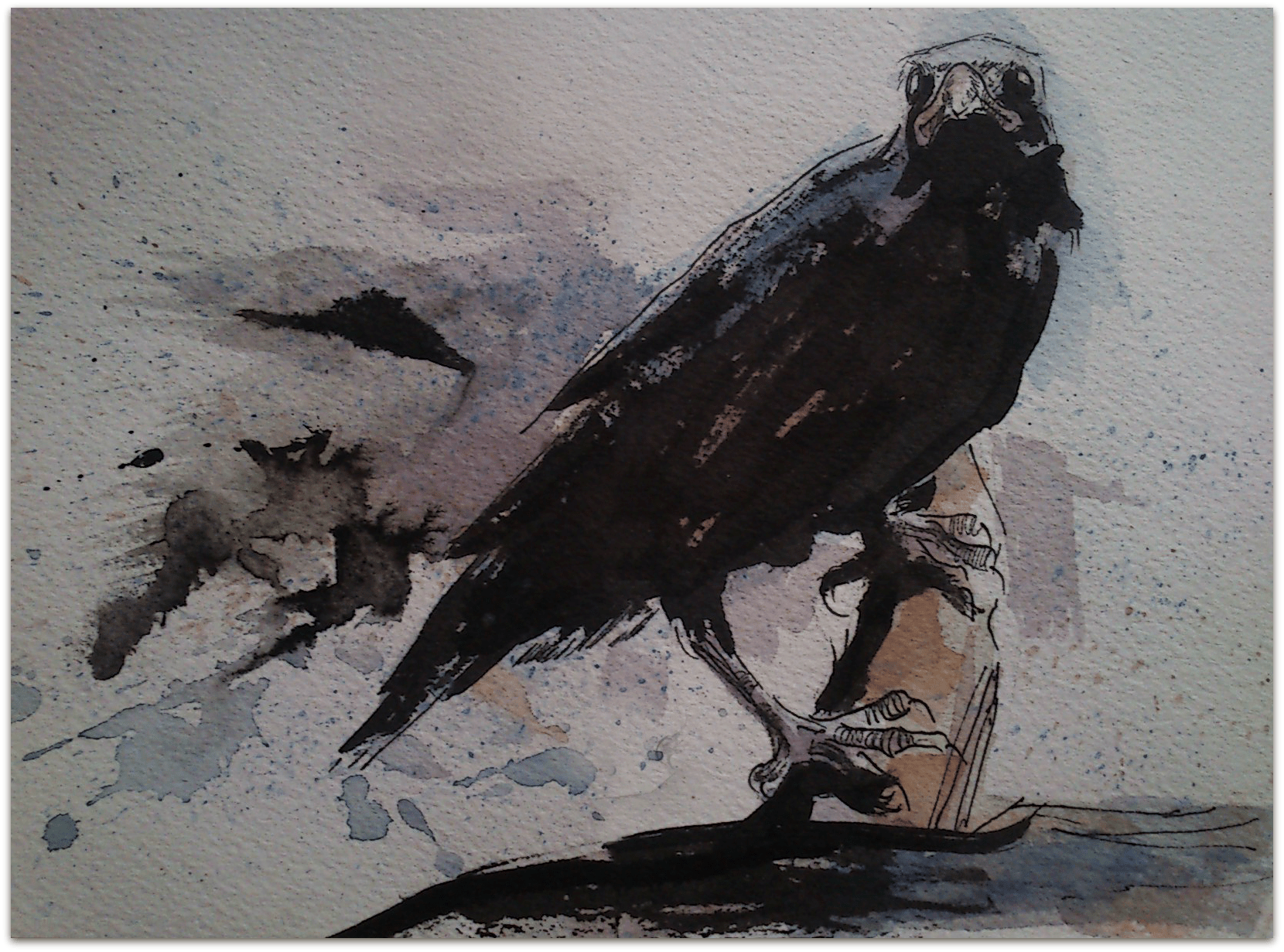
Illustrated by Zach Tuinman

The Orenda promises rich book club conversation. 

      The potential talking points are bountiful.  Compare and contrast Huron and Jesuit attitudes and beliefs.  Explain how the Christophe’s conversion strategies change as the story progresses.  Explore the significance of the Raven as a symbol throughout the narrative.  Which characters view their decisions as altruistic?  Do you agree with them?


I thought I was well informed, but I didn’t know what I didn’t know —  until I researched further.


Readers can dig deeper into Canada’s past.

     I urge you to read Jacki Andre’s “Contagious Disease and Huron Women—1630 -1650”, a work that connects directly to experience of the female characters in The Orenda.  She details the declining power of the Huron women to influence social, economic and political issues in their communities post Samuel de Champlain.

     Readers will gain a deeper understanding of the domino effect of historical events and their devastating impact on the Huron people.  Cultural practices and spiritual beliefs of the Huron people were deeply affected by:  a succession of epidemics and famine; agricultural misfortunes; conflict with the Five Nations over resources and trade; and the dogged conversion efforts of the Jesuit missionaries.

      Jacki Andre’s work also explains the Huron mythology involving Aataentsic, the mother of all people.


It is always exciting to gain some insight into the author and their work.

   What is Boyden’s personal connection to the Jesuits?  Does he have first hand knowledge of the Sweet Water Sea?  What is his experience of the physical setting of the story?  Why does the name “Gosling” have sentimental value?  Who does Joseph Boyden turn to for mentorship?

     You can satiate your curiosity for all things Boyden by checking out online interviews.  Here are a few to get you started:


Have you found links to book club chat questions about The Orenda?   I’d love to hear from you.

Five Bits of Wisdom from Giller Prize Winners

Intro BlogA journey begins with a single step – one foot in front of the other.  And so must a writer’s journey begin with the stroke of a pen or the click of a keyboard – one word in front of the other.

I felt some trepidation as I prepared for my first foray into social media.  What topic of discussion would be worthy of the distinguished title, “first blog post”?

As fate would have it, after clicking “follow” Globe Books, my new Twitter account served up a video interview featuring four Giller Prize winners giving advice to aspiring writers.  Margaret Atwood, Linden MacIntyre, Austin Clarke, and M.G Vassangi each distilled their experience into a few succinct and impacting comments.

These are the five bits of wisdom that I will carry forward:

1.  Write often, apply the craft, rework your writing, and then edit.   Writing should be as routine as breakfast, lunch and dinner so when you sit down with pen in hand or keyboard on lap, the words begin to flow.

 2.  If you wait for the perfect time to write, you’ll wait forever.  The need to tell the story should compel you to write in every available moment on any available surface: old envelopes, the margins of the newspaper, a laptop keyboard, or paper towels at the gym.

 3.  The silent moments are necessary for productive writing and should not be allowed to slip by unused.  If they don’t happen naturally, create them.

4.  Your experience of a community can inform your writing.  Think of the communities, both large and small, that you are a part of — a culture, a city, a neighbourhood, or an organization.  .

5.  Keep the aspiring in aspiring author.  Aspiring means to seek ambitiously, especially something of high value, so keep that momentum going.  Write voraciously and direct your efforts toward a specific goal.

We all start somewhere, whether it is our first blog post, first novel, or first short story submission.  Even a Giller Prize winner must have followed his or her own advice and aspired to take that first of many steps,  So here I go.  First step, press “publish”!

What advice has inspired your writing life?  I’d love to hear from you.