
Nahneebahweequay—a woman of courage and tenacity—was born in 1824 to the Mississaugas of the Anishinaabe First Nation. Her name means upright woman. She became an activist for Indigenous land rights with her feet planted firmly in both her native heritage and the English world in which she was known as Catherine Sutton. Her fight for justice led her to meet with Queen Victoria at Buckingham Palace.
Continue reading “Nahneebahweequay (1824-1865)–A Champion for Indigenous Land Rights”
I read an essay recently in which the writer reflects on the first piece of art she’d ever bought as a young woman. The purchase of this large gaudy painting, she declared years later, made no sense then or now. She deemed the colours too bright, and the subject matter unaligned with her cultural identity. By the final paragraph, however, she concludes that the painting reflected her mood at the time of purchase.
It got me to thinking about the first art I’d purchased. It’s become such a part of my environ that I haven’t considered it for some time. The piece is a stone sculpture by George Henry. I acquired it around 1978 at the gallery in Whetung Ojibwa Centre of Curve Lake, Ontario.
Continue reading “First Art Piece”
I’ve nearly worn out my DVD box set of Dr. Quinn, Medicine Woman from having watched it so often. Dr. Michaela Quinn had the cure for almost everything and often sought the council of her First Nation Cheyenne friends who taught her about medicinal plants growing in the wilds. Episodes often mentioned people suffering a catarrh or ague. These terms appear in a number of pioneer journals as well and I’ve always been curious about their meaning.
Continue reading “Pioneer Illnesses: Catarrh and Ague”
What must food growing have been like for the earliest newcomers to Upper Canada? Many families arrived with a sack of seed and little else.This spring when we cleared more ground for planting vegetables, I thought about how much more difficult the task must have been for the earliest settlers. Before planting food, settlers first had to cut down an army of trees and remove obstacles like roots and boulders. I certainly didn’t have to contend with such challenges. Our garden plot will generate produce to can or freeze, but nothing sufficient to sustain us until the next growing season. Plants are just beginning to yield and August is half over.
(Please enjoy this Wellspring Podcast of Pioneer Food Gardens and Orchards.) Continue reading “Pioneer Food Gardens and Orchards”
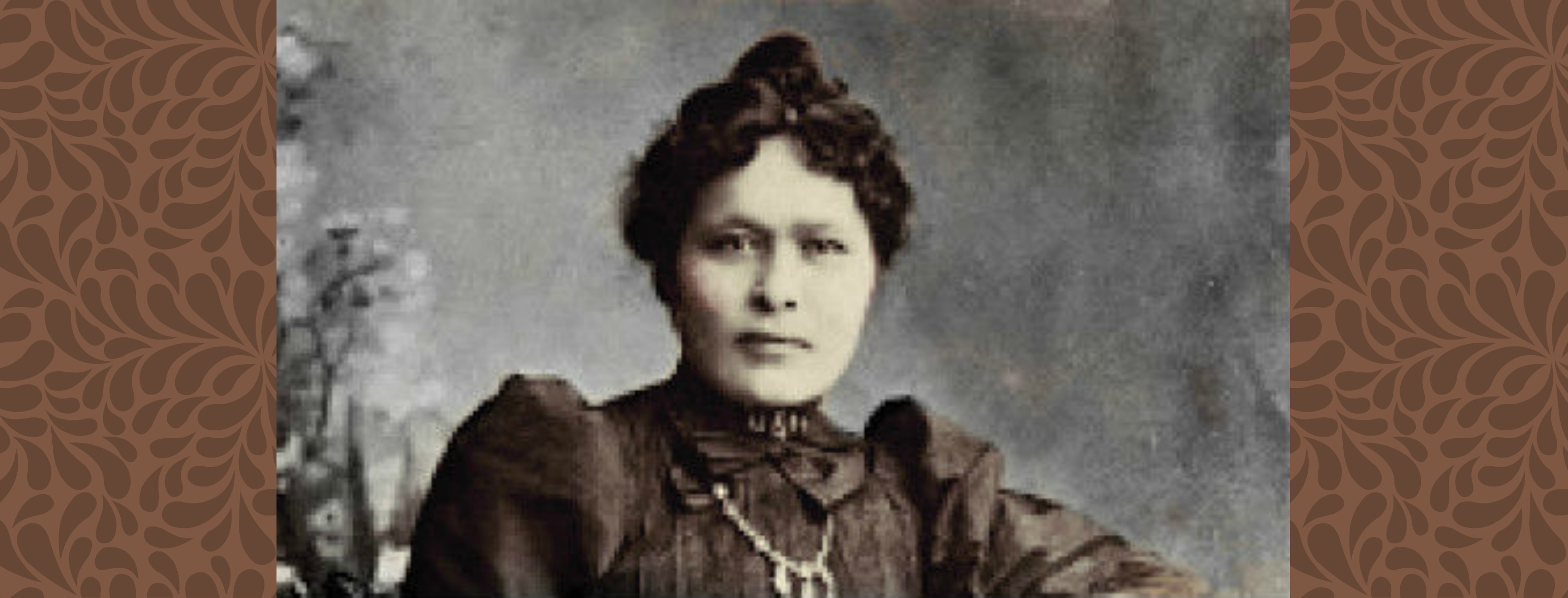
The Gold Rush era and it’s tales of fortune and misfortune continue to intrigue me. When I see those haunted faces staring out from old photographs, I find myself wondering at the life stories behind their expressions of defeat. Of course, not all images convey a dismal fate. Some are filled with round faced optimism and celebratory expressions. Continue reading “Kate Carmack: Cheated of Klondike Gold”

Mourning Dove was a woman ahead of her time, a determined and progressive thinker. She is credited as being among the earliest Native American women to publish a novel. Her book, Cogewea, shares the oral tradition of the Northern Plateau people and her life experiences inside the Interior Salish culture. Continue reading “Mourning Dove: A Native American Writer Diverted”
‘
“Sinzibuckwud’ is the Algonquin name for maple syrup. The literal translation is “drawn from the wood“.
Early in the 16th century, the First Nations people shared their maple syrup making process with Europeans. In 1521, Peter Martyr wrote that “Honey is found in the tree, and is gathered amongst the briar and the bramble bushes.” Continue reading “Maple Syrup: A Sweet Lesson from The First Nations”