For me, a bicycle represents exercise, a pleasure ride down a country road, or an eco friendly trip to the farmer’s market. I’ve written in the past of my fondness for ridingon two wheels. For Victorian women of the mid 1800’s, bicycles represented something quite different, something I’ve taken for granted — freedom. Continue reading “Bicycles Changed the Lives of Victorian Women”→
The Gold Rush era and it’s tales of fortune and misfortune continue to intrigue me. When I see those haunted faces staring out from old photographs, I find myself wondering at the life stories behind their expressions of defeat. Of course, not all images convey a dismal fate. Some are filled with round faced optimism and celebratory expressions. Continue reading “Kate Carmack: Cheated of Klondike Gold”→
I’m drawn to stories about the human experience, surprising acts of kindness and the overcoming of insurmountable odds. And so, with April being Holocaust Survivor month, my aim was to visit the character of someone who helped to rescue the most vulnerable in these horrific circumstances — the children. Continue reading “Holocaust Remembrance: Nicholas Winton’s 669 Children”→
Intrigued is the word that best describes how I felt after discovering this photo. The moment I saw the face of Grigori Rasputin, my mind zipped back to 1978. Suddenly, I was 14 years old again and leaping around the living room while “Ra Ra Rasputin, lover of the Russian queen” boomed from the hi-fi speakers. Each time the music skipped, I’d race over to the reset the needle on the vinyl album and begin the song again.
This photograph leaves me with so many questions. Who would look so pleased about publicly aligning herself with such a man? Matryona Grigorievna Rasputin, daughter of the Mad Munk, is the mysterious subject of the photo. She changed her name to Maria — a more socially upward and marketable name. And yes, it is a look of pride she’s wearing as she shares the frame with her father’s image.
Maria Rasputin 1899-1977: Photo credit: Hulton Archive, Getty Images
Maria was born in a Siberian village in 1899 to Grigori Rasputin and Praskovia Fyodorovna Dubrovina. After her father’s notoriety spread, the family moved to St. Petersburg where she attended a private school and socialized in royal circles. She was 17 years old at the time of her father’s death. How does one survive the exploits of a an infamous parent?
She broke off an engagement, to a Georgian officer, to marry an up-and-comer who was a great admirer of her father. Maria made this decision based on the advice of people who claimed they’d communicated with Rasputin’s spirit during a séance. He’d reached out from beyond the grave, they said, to tell her that this marriage was meant to be.
Her new husband turned out to be philanderer and an unscrupulous con artist with a knack for making poor financial choices. He died of tuberculosis in 1926, after they’d fled to Paris. Maria supported herself and their two children by working as a governess. She unsuccessfully sued her father’s murderer; the Paris courts dismissed the case and declined involvement in a crime stemming from Russian politics.
Maria Rasputin continued to lead an eclectic lifestyle. She danced in cabarets in Paris, France and Bucharest, Romania. In the 1930’s, she toured Europe and the United States with Ringling Brothers Circus as an animal trainer and lion tamer. Crowds were attracted by promises that she controlled wild animals with the same hypnotic powers that her father had exacted on the Russian royal family.
Photo credit: Hulton Archives, Getty Images
She was mauled by a circus bear in Peru, Indiana, but soldiered on until the show reached Miami, Florida where she worked as a riveter in a shipyard during WW2. In 1940, she met her American husband and was granted U.S. citizenship. In the late 1960’s, Maria announced herpsychic powersand identified Anna Anderson as being the illusive Anastasia Romonav —a claim she would later recant.
Maria published three memoirs detailing the life of her father and his relationship with the Russian royal family. In an interview with the Los Angeles Times, she said, “My father was a very kind, very religious man. Always he think of others — never himself. Many people were jealous of him.” Maria would tell her grandchildren in the years to come, that their great grandfather was a “simple man with a big heart and strong spiritual power, who loved Russia, God, and the Tsar”.
Maria Rasputin being interviewed by a journalist from the Spanish magazine Estampa in 1930 Photo credit: Wikipedia
So many questions and creative thoughts are swirling through my mind. I’m sipping a cup of tea as I write, trying to think of how to funnel them into one succinct paragraph. I think I’ve arrived at the two words to begin with — resilienceand tenacity. No matter what life threw at Maria Rasputin, she bounced back covered in sequins, arms raised above her head, and radiating that “look at me world, I’m back” kind of smile. I find myself reflecting on the nature versus nurture question and heritable traits.
My impression is that she was a larger than life character. Surely, Maria must have inherited some of the personality traits that moved her father from poverty to palace. There are aspects of this woman that will most certainly inspire my pen.
“They ask me if I mind to be in a cage with animals and I answer, “Why not? I have been in a cage with Bolsheviks.”” ~ Maria Rasputin
What are your impressions of Maria Rasputin? Is there some trivia you’d like to share? I’d love to hear from you.
Anyone whose had a cold will tell you it’s uncomfortable. There’s a headachy feeling that renders us pale and listless. It comes on the heels of sleepless-can’t-breathe nights that leave our eyes ringed in shadows.
The thing about having a cold, is that everyone understands what ails us. We usually garner some degree of sympathy from those around us. Folks understand that the coughing, sneezing, and snuffling are symptoms. We don’t worry that people will find out we’ve gone to the doctor for help when the cold gets the better of us.
What if we changed the wording in the previous paragraph? Suppose that cold turned to bipolar disorder. Imagine that coughing, sneezing, and snuffling became mood swings, altered judgment, and puzzling behavior. What if we could change the words and the paragraphs still rang true? Continue reading “Growing Compassion for Bipolar Disorder”→
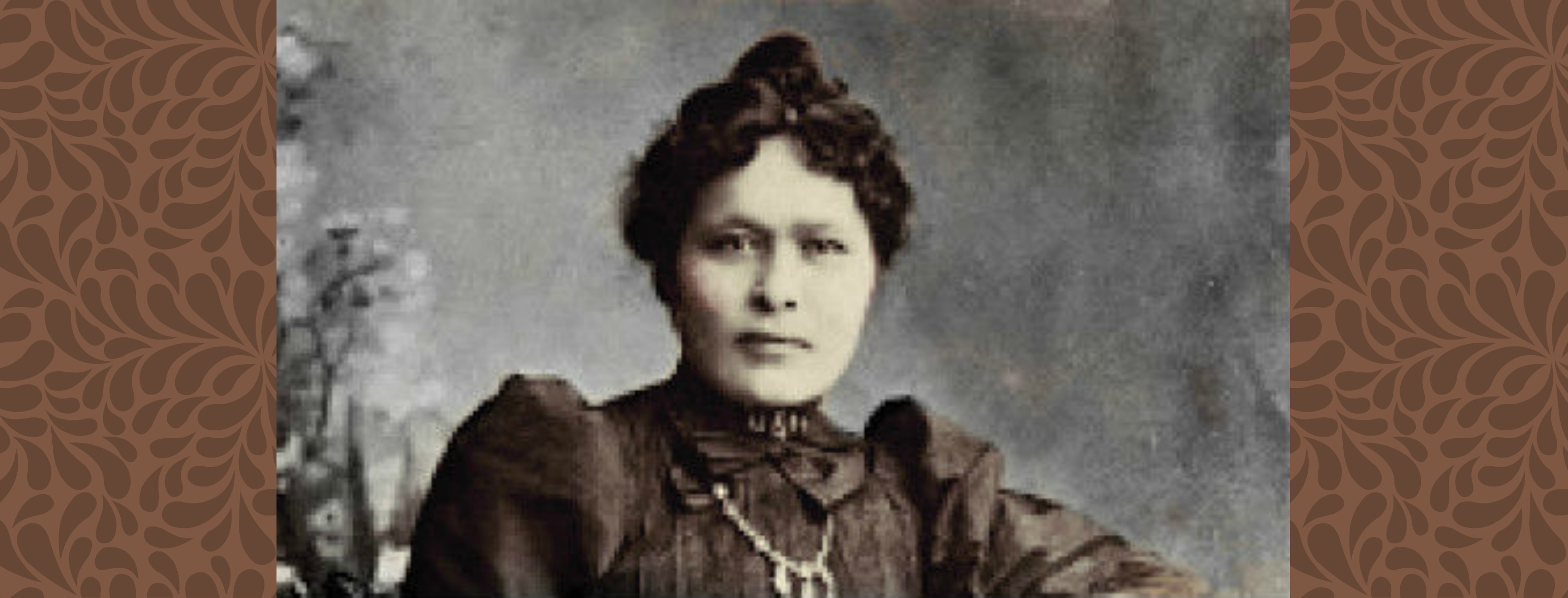
Mourning Dove was a woman ahead of her time, a determined and progressive thinker. She is credited as being among the earliest Native American women to publish a novel. Her book, Cogewea, shares the oral tradition of the Northern Plateau people and her life experiences inside the Interior Salish culture. Continue reading “Mourning Dove: A Native American Writer Diverted”→
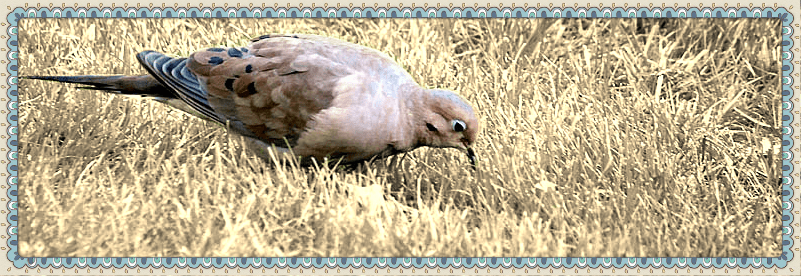
I’m thinking now of a room bathed in morning sunlight and of lace curtains floating on a breeze. The coo of a Mourning Dove reaches my ear. The sound gently nudges me into awareness. The dove is somewhere in a garden, perched boldly on a fence top or peering shyly through a screen of leaves in the pear tree, the oak or perhaps the maple. The thought of a dove nearby cheers me.
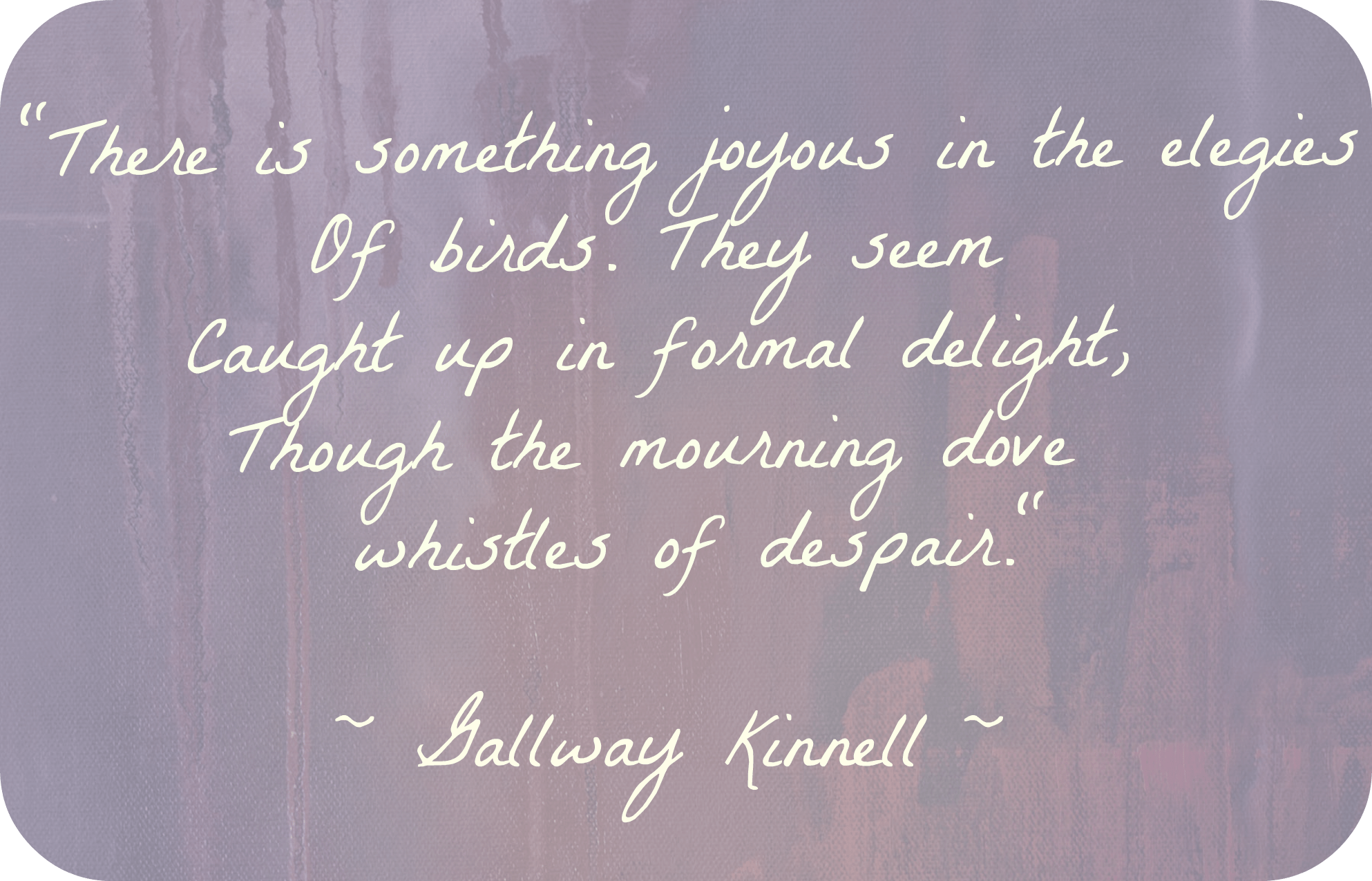
Mourning Doves have come to symbolize peace. We associate them with romance, longing, and perhaps sorrow. Their call soothes the soul; their soft colouring and marblelike façade pleases the eye. No wonder they are a common muse for artists and poets.
When the phrase “Mourning Dove hunting season” appeared on my computer screen during a research session, I blinked and read again. Surely I must be mistaken.
Last year, for the first time since 1955, Environment Canada announced a Mourning Dove hunting season in Ontario, from early September to mid November. Licensed hunters in specified rural areas, were permitted to take 15 doves per day with a maximum possession limit of 45 birds.
A startled outcry erupted from bird lovers, animal activist groups and the romantics among us. Officials quickly pointed out that British Columbia has held open season on Mourning Doves since 1960. The practice is common throughout the United States.
The Canadian government defended their decision on two fronts. First, The Mourning Dove has been recognized as a game bird since 1916. Secondly, their numbers were abundant enough to sustain a harvest; experts projected that 1% of the mourning dove population would be affected.
Prior to this week, I didn’t know doves could wind up on a plate. I’d heard of squab, but never realized that it was a discrete term for — pigeon or dove. This is not a meal for me, a thirteen year vegetarian.
Perhaps visions of Mourning Dove domesticity will cleanse my mental palette of the afore mentioned imagery. The Mourning doves’ ability to produce six broods per year, in warm climates, accounts for their abundant numbers across North America. When it’s time to nest, the male collects materials and passes them to the female. She takes charge of building. After the eggs are laid, the nest is never unattended. The male dove sits on the eggs from morning until afternoon, when the female resumes her place on the nest. The pairs lean toward monogamy, reuniting the following year or remaining together through the cold winter months.
Photo credit: Matt Fletcher
Lead photo by Ben Tuinman
Please leave a comment! I’d love to hear from you.
“Sinzibuckwud’ is the Algonquin name for maple syrup. The literal translation is “drawn from the wood“.
Early in the 16th century, the First Nations people shared their maple syrup making process with Europeans. In 1521, Peter Martyr wrote that “Honey is found in the tree, and is gathered amongst the briar and the bramble bushes.” Continue reading “Maple Syrup: A Sweet Lesson from The First Nations”→
A writer’s brain is a tornado of thoughts. Some scenes and stories remain trapped in the vortex, while other bits of dialogue and character details fling out at unpredictable times.
When I first began writing, I devoured article after article recommending strategies to summon the writing fairies. The little winged wonders would only hover above the page, dropping words there if I graphed, plotted, and performed any other myriad of detailed steps. These time prescribed strategies didn’t fit me. I don’t think in a straight line. I think in a combination of frolicking sideways leaps, forward bounds, and pirouettes. Continue reading “Seeking Inspiration — Writer’s Brain + Gym = Creative Solutions”→