Gwen Tuinman

Category

Seeking Inspiration

Cello: A Voice to Love

Beatrice Harrison copyright unknown

Cello music is a curative. It heals over the day’s wounds and calms the spirit. It speaks in low soothing tones or pleads through vibrato. It approaches with fleeting steps or storms about the room without apology. Its dulcet tones summon the imagination and make way for creativity. Continue reading “Cello: A Voice to Love”

Viola Desmond: Harbinger of Change

Fotor0220210044

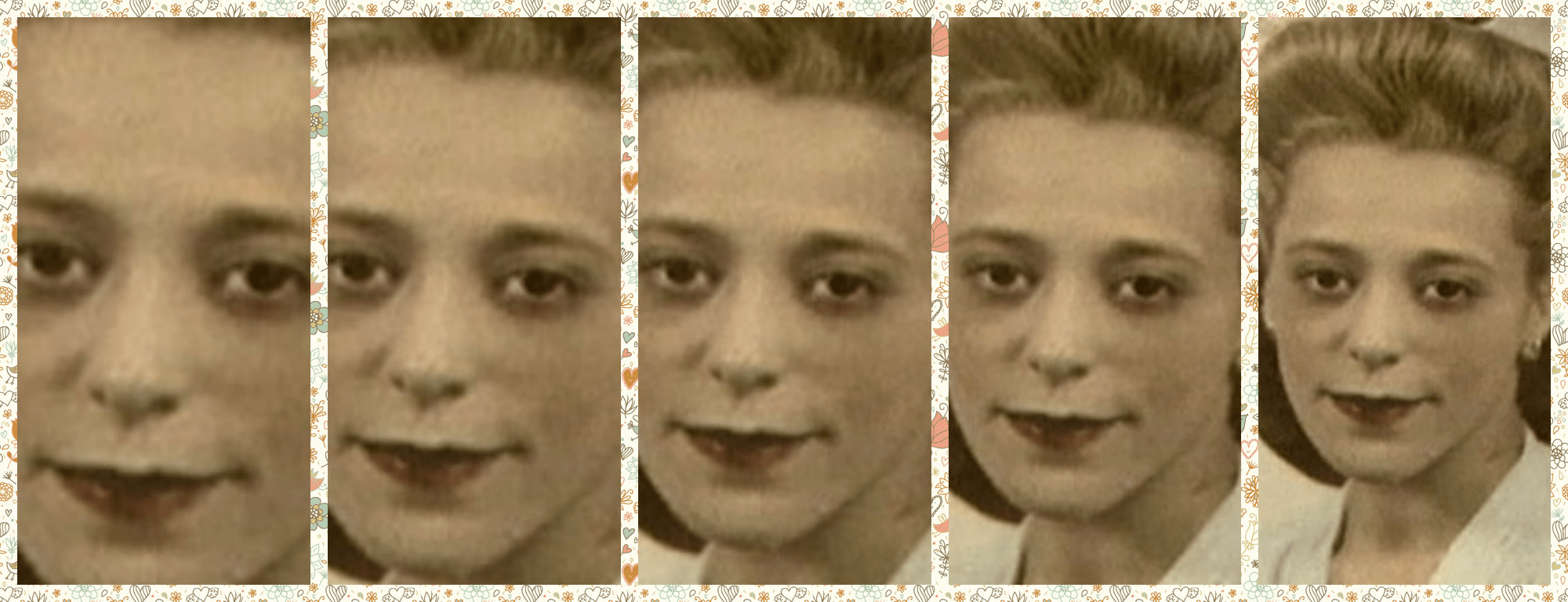
Viola Desmond was a Nova Scotian who refused to abide by segregated seating in a public space — nine years before Rosa Parks refused to sit at the back of the bus. During Black History Month, Canada celebrates her courage and reflects on her experience. Continue reading “Viola Desmond: Harbinger of Change”

Lovelocks on Bridges: Pledge or Problem?

p1010490

There was a time when lovers carved their initials into trees as a testament to their love. We’re all environmentalists now, so that practice has fallen from favour.  Romantics are turning to another expression of devotion — lovelocks.

The first time I saw lovelocks clipped to a bridge railing was this past November on a visit to Ottawa. I had set out with great interest in the Corktown Footbridge. This pedestrian bridge spans the Rideau Canal to link Somerset Street East and the University of Ottawa to Somerset Street West in Centretown. Previous to 2006, the canal could only be crossed when the waters froze over in the coldest winter months.


p1010505


Couples purchase a lock that they can either write or engrave their names on. They connect it to the railing of the bridge, then toss the key into the water as a symbolic act of commitment. To quote one frustrated observer, “If you’re going to add a love lock to the collection, you are supposed to put your names, a date of significance, and throw away the keys. Combination locks DO NOT have keys!”

Lovelocks on bridge in Cologne, Germany
(photo credit: Luca Gargano)

The lovelock tradition hales from a footbridge in the Serbian town of Vrnjačka Banja. In the early 1900’s, a local schoolmistress named Nada met there with a soldier named Relja. The couple pledged their love for one another, but when World War 1 called him to serve on the Thessaloniki front, Relja’s affections changed. He fell in love with and married a woman from Corfu, Greece where he remained.  Nada died, it is said, from a broken heart.

 Love Bridge, Vrnjačka Banja, Serbia, Wikimedia Commons
Love Bridge, Vrnjačka Banja, Serbia, Wikimedia Commons

Young couples began visiting the bridge to pledge their devotion to one another by adding a lock to the rail and tossing the key into the river. The practice grew in popularity after publication of “A Prayer for Love”, a poem by Desanka Maksimovic.  Lovelocks appeared on bridges in Rome after Federico Moccia’s I Need You described a couple connecting a lock to a lamp post on the Milvian Bridge. The popularity of lovelocks is spreading across North America and Europe. Adding a lovelock to a railing has even become a popular add on to some wedding ceremonies.

lamp post at milvian bridge
Italian officials express concern that the weight of the locks may topple the light posts.

Not everyone is keen on the idea

City officials in Ireland, France, and even Canada have removed lovelocks from bridges citing concerns over aesthetics and the risk of damage to the metal railings. Also, the clusters of locks prohibit views of the railings and other architectural details.

In Paris, officials removed padlock laden railings from the Pont des Arts this past summer, for fear that they may separate from the bridge and crush boats passing beneath. Kentucky has taken steps to ban lovelocks from being attached to their bridges.

Women Doctors — The 19th Century New Frontier

81yEUi7

These three women are graduates of The Women’s Medical College of Pennsylvania (WMCP).   Their accomplishment is made more extraordinary because it was achieved during an era where discrimination based on gender and ethnicity was commonplace. This photograph was taken as a memento of the Dean’s reception on October 10, 1885.

The Quakers of Pennsylvania can be credited with the creation of  WMCP, the first women’s medical college in the world! In addition to their active role in the abolitionist movement, the Quakers were also strong advocates of women’s rights. The WMCP is also well known by followers of the popular Dr. Quinn Medicine Woman series, as the college attended by the fictional character, Michaela Quinn.

Dr. Anandibai Joshee

The story of Dr. Anandibai Joshee is one of inspiration and tragedy. Born to a wealthy Brahmin family in India, she was married at the age of nine to a man twenty years her senior. Her husband, a progressive thinker, encouraged her to learn how to read, write and study, not only in Sanskrit, but in English — an extraordinary pursuit in a time when the education of women was uncommon. Anandibai gave birth to a son when she was only fourteen years old, but the child died ten days later. The absence of lifesaving medical access,  motivated her to pursue an education in medicine.

Photo Credit: Wikipedia Commons

When Anandibai’s health took a downturn, an American supporter forwarded medications but to no avail. Her husband urged her to forge ahead and pave the way for other Indian women with similar interests. She received pressure from all sides. The Americans who offered to help with lodging and college applications, insisted that she convert to Christianity. Persecution by her Hindu community ceased when she gave a public speech promising not to convert. Anandibai also commented on her country’s need for medical practitioners and her intent to return home and open a women’s medical college. The Viceroy and many others from across India gave rupees to help cover her expenses. Although she contracted tuberculosis in America, she somehow managed her studies.

Anandibai graduated from the Women’s Medical Medical College of Pennsylvania in 1886 and returned to Calcutta where she was highly celebrated. Even Queen Victoria sent her a message of congratulations. Not only was she the first Indian woman to earn a degree in Western medicine, she is possibly the first Hindu woman to arrive in America. Anandibai succumbed to tuberculosis at age 22, less than a year after her return to India.

Dr. Kei Okami

Dr. Kei Okami was the first Japanese woman to complete a degree in Western medicine. She began her first career as a teacher Sakurai Girl’s School at the age of twenty.  Five years later, she married and emigrated to the United States with her husband.

WCMP: Photograph Collection. 1850-present. (ACC-AHC1)

With the financial support of The Women’s Foreign Missionary Society of the Presbyterian Church, Kei was able to attend WMCP.  She graduated four years later in 1885. After returning to Japan, Kei was appointed head of gynecology at the Jikei Hospital in Tokyo. She resigned from her post a few years later when the Emperor refused to receive her during hospital visit because she was a woman. Her life experiences continued to be eclectic. She returned to the field of education as a vice principal and again to medicine. Kei opened a small hospital in 1897 that ran successfully for nine years and around the same time, she opened a nursing school. She also served in the mission field of Japan, sharing her strong devotion to the Christian faith.

Dr. Sabat Islambooly

Less is known about Dr. Sabat Islambooly. She returned to Damascus and it’s believed that she went on to Cairo, Egypt.

IWCMP: image from the History of Medicine (NLM)
Women’s Medical College of Pennsylvania: image from the History of Medicine (NLM)
Top of page/Photo Credit: Woman’s Medical College of Pennsylvania: Photograph Collection. 1850-present.  (ACC-HC1)

Please leave a comment. I’d love to hear from you.

Quakers in the Movement to Abolish Slavery

Quaker meeting. After painting of 1839.

Quakers are a part of my heritage.  I’ve learned this through family tree research conducted in recent months. The connection delights me. I already had a general understanding of Quakers as peaceful folk who lived simply. I am pondering Quaker involvement in the underground railroad and their anti slavery sentiments.

I’d always assumed that individual Quaker families across the new world chose to assist runaway slaves to freedom, based solely by their observances and personal convictions. I soon discovered this was not entirely the case. They were part of a large and well organized movement.

Quaker symbol for abolition

At the Heart of Quakerism

All people are equal. This is the core belief that accounts for Quaker involvement the anti slavery movement. At worship meetings, even today, there is no evidence of any hierarchal structure; people speak when they feel compelled to do so.  A priest is not a necessary conduit as Quakers believe that each person has a direct relationship with God. The collective faith is known as the Religious Society of Friends and members generally congregate at Quaker meeting houses.

The First Religion to Denounce Slavery

George Fox
George Fox

Quaker disapproval of the slave trade can be traced back to the  late 1600’s. The idea of one man owning another could not be reconciled against their belief that all men are equal. As the Friends travelled between Britain and the colonies, they witnessed atrocities that their disdain for the practice of slavery.

 “… if you were in the same condition as the Blacks are … now I say, if this should be the condition of you and yours, you would think it hard measure, yea, and very great Bondage and Cruelty. And therefore, consider seriously of this, and do you for and to them, as you would willingly have them or any do unto you …  were you in the like slavish condition.”  George Fox, 1676 (Founder of Quakerism)


Society for the Abolition of the Slave Trade

The Quakers were the first religious organization, in Britain or the colonies, to publicly stand against slavery.  In 1783, a Quaker group initiated the abolition movement but their voice wasn’t heard until they combined their efforts with a group of like minded Anglicans. Together they started the Society for the Abolition of the Slave Trade.  Nine of the group’s twelve members were Quaker; this was problematic as Quaker’s were barred from speaking in parliament.  William Wilberforce became their parliamentary spokesman and it is he who popular history identifies as the force behind the movement. However, if not for years of financial support by Quaker merchants and businessmen, history would have looked quite different.

germantown-protest

A People of Action

In the Americas, as in Britain, Quaker involved themselves in debates about the slave trade and parliaments were lobbied to end the slave trade. Friends worked to convince their communities to end the practice of slavery through posters and slogans. Protests were held and pamphlets distributed, and anti slavery articles were sent to newspapers. Logos were stamped on items for purchase and women wore pendants bearing the phrase, “Am I not a sister and a woman.”. Quaker groups boycotted goods like sugar, produced by slave labour. In short, their strategies are the same as those of modern day movements.

Quaker Catalysts for Change

Thomas Clarksonelizabethheyrick_msvol239_237joseph sturgeSophie Sturgejohn woolmanAnthonyBezet 

Thomas Clarkson was a leading force in the abolitionist campaign throughout Britain.  After slavery was abolished in his own country, he went on to campaign elsewhere.

Elizabeth Heyrick believed in the immediate emancipation of all slaves. The distribution of her pamphlet played a role in changing public opinion about the use of slave labour.

John Sturge (businessman and philanthropist) and his sister, Sophia Sturge (left figure in fourth photo) visited 3,000 homes to promote a boycott of sugar produced through slave labour. They were appalled by conditions witnessed in the West Indies.

John Woolman worked in Britain and the Americas to end slavery. In 1754, he distributed the first pamphlet denouncing the practice.

Anthony Benezet worked ferverently to demonstrate the equality between the races. He taught poor black children to read. Notably, he also started the first American public school for girls. His work was influential on Thomas Clarkson.

“To live in ease and plenty by the toil of those whom violence and cruelty have put in our power, is neither consistent with Christianity nor common justice…” Anthony Benezet (click to tweet)

Please leave a comment.  I’d love to hear from you!

Women of the Klondike Gold Rush

University of Washington Libraries. Special Collections Division

The very mention of the Klondike Gold Rush conjures images of snowy mountain tops, babbling brooks,  burly unshaven men. and robust women– the kind you don’t take home to mother.

There is no denying that prostitution played a role in Yukon. On the infamous Paradise Alley alone, there were seventy small cabins, each housing a different call-girl. Many of these women had fallen prey to charismatic pimps who persuaded them across the Chilkoot Pass. In the end, they were little more than white slaves.

If not plying the oldest profession to a bountiful and captive clientele, what might attract a woman to the Klondike Gold Rush?

Some wanted to escape the confines of Victorian expectations.  In the Klondike, a woman could dress like a man and do the work of a man without judgment. At home, only financially destitute women sought employment. They were funneled into mindless factory jobs that required little skill. Even then, they were expected to give their position up to the first suitable male candidate that came along. A woman’s place was, after all, in the home.

paradise alley
Women plying their trade in the prostitute district of Dawson just behind Front Street known as Paradise Alley, Yukon Territory, ca. 1900 — University of Washington Libraries. Special Collections Division

Entrepreneurial Spirit

In his book The Klondike Quest, Pierre Berton tells the story of  one woman’s tenacity.  She kneaded dough for bread but it refused to rise in the cold temperatures. The woman carried the dough on her back, next to her skin, so her body heat would cause the dough to rise.  She then baked the bread and sold it for a handsome profit to fund her journey.

Kate Carmack 1898 (Yukon Archives)

“What I wanted was not shelter and safety, but liberty and opportunity.”  Martha Black (Second woman named to Canada’s House of Commons)

There would have been no Klondike Gold Rush if not for Yukon woman, Shaa Tlaa, also known as Kate Carmack.  The discovery of gold is widely credited to the men in her family: George Carmack  (husband), Skookum Jim (brother), and Dawson Charlie (nephew).  According to author Fred N. Atwood, it may have been Kate who found the first nugget.  While salmon fishing at Rabbit Creek during the summer of 1896, gold was discovered by  “…while Carmack was resting, his wife in wandering around, found a bit of bedrock exposed and, taking a pan of dirt, washed it and found that she had some four dollars in coarse gold.”– The Alaska-Yukon Gold Book.

Actresses like Klondike Kate and Mae Field entertained in theatres, saloons, and dance halls; they were embraced by polite society. Their income, at roughly $200 per month, exceeded the earnings of Sam Steele and his Mounties.  While not engaged in prostitution,  their creative entrepreneurial spirit did lead them into mischief. Klondike Kate dressed as a boy and hopped on a scow pulling away from the dock so she could avoid being turned away at a Mounty checkpoint.

A group of actresses crossing the Dyea River (Image Credit Getty/Hulton AP)

Over the course of 52 days, Grace Bartsch and her husband, Chris, drove a herd of 500 sheep, 50 cattle and one goat to Dawson City. Her diary gives an account of the difficult journey made partly on horseback and partly by train.

Dr. Lydia Clements left her successful practice and her dentist husband in Brooklin, to pursue what she thought would be a fruitful medical practice in Dawson. She was the only member of her party to completed the expedition and, quite possibly, the first woman from the eastern USA to cross the Chilkoot Pass. She opened a medical practise in Dawson and staked several mining claims. She travelled home many times but always returned to the Yukon, refusing to be defeated a succession of financial losses.

Dr. Lydia Clements --Print Collection portrait file. Belinda Mulrooney 1898 photo credit: Wikipedia
(Left) Dr. Lydia Clements –Print Collection portrait file.
(Right) Belinda Mulroney 1898
photo credit: Wikipedia

Belinda Mulroney  was legendary in her ability to turn a profit. She made her way to Dawson City carrying items for sale: silk undergarments, cloth, and hot water bottles. Her profits allowed for the purchase of a restaurant that, in turn,  generated sufficient funds for the building a two story hotel. Visitors to the hotel offered her valuable information about mining opportunities. Inside of a year, she owned five mines, either outright or in partnership. Her profits here allowed her to establish the  luxurious Grand Fork Hotel. She was also invited to manage the struggling Gold Run Mining Company which she did, successfully bringing it into the black inside of 18 months.

Flora Shaw, a newspaper editor, travelled from London to Dawson City to report on the Klondike Gold Rush. In the end, she supported the notion that women could play a role in developing the Yukon. She said that “in the expansion of the Empire, as in other movements, man wins the battle, but woman holds the field.”

(Photo at top of post: Woman arriving in the streets of Dawson with a dog team carrying her luggage, Yukon Territory, 1898 — University of Washington Libraries. Special Collections Division)


Please leave a comment! I’d love to hear from you.

Klondike Gold Rush: Buyer Beware

University of Washington Libraries. Special Collections Division

Something intoxicating happened on  a July morning in 1897.  A steamship known as The Excelsior unloaded its first batch of successful Yukon prospectors onto a San Francisco dock. They dragged baggage behind them, loaded to the gills with gold.  Gold dust. Gold nuggets. Gold bars. Word spread quickly and when the ship prepared for its return trip to the Klondike,  agents were overwhelmed by a demand for tickets that exceeded the ship’s capacity by over ten times.

Is it any wonder that a whisper of prosperity in a far away place could start a two year stampede to parts unknown? The late 1890’s brought with it a period of economic depression that swept the whole of North America. Gold was scarce. Many people struggled to attain the necessities of life. The Klondike and the dream of gold offered an escape from their despair.

The Excelsior leaves San Francisco for Klondike July 28, 1897
The Excelcior leaves San Francisco for Klondike July 28, 1897, University of Washington Libraries, Special Collections Division

Spreading rumours of gold drove throngs of men and women abandoned their homes, surrendered their jobs, and left behind their families. They rushed to port cities like San Francisco, Portland, Seattle and Victoria, in hopes of gaining passage on some vessel headed to Dawson City in the Yukon Territory. Memento photographs were fashionable parting gifts for loved ones. Prospectors posed, individually or with travel mates, in front of painted backgrounds featuring Yukon scenes. They dressed in newly acquired mackinaws and held props like rifles, snowshoes or  fiddles. Subjects reclined on bearskins and fake snow. One can’t help but wonder how reality matched the fantasy of their adventure.

The first perils of the journey began here at home. Many of these tenderfoots fell prey to unscrupulous businesses and empty promises. One promoter promised a reindeer mail delivery service similar to the pony express.

Shows Klondikers waiting to be checked by customs and the North West Mounted Police at the Canada - United States boundry line -- University of Washington Libraries. Special Collections Division
Shows Klondikers waiting to be checked by customs and the North West Mounted Police at the Canada – United States boundary line — University of Washington Libraries. Special Collections Division

Suave salesmen oiled the dreams with products to guarantee success for the soon-t0-be-rich. Pierre Berton’s The Klondike Quest lists “coffee lozenges, evaporated eggs, desiccated onions, beef blocks, peanut meal, saccharine and pemmican; and on the less practical devices: mechanical gold pans, nugget-in-the-slot machines, patented gold rockers, collapsible beds, knockdown boats, portable cabins, scurvy cures, even x-ray machines designed to detect the presence of the golden treasure hidden in the dross.” Manufactured goods — soup cans and glasses — were stamped with “Klondike” and flew off the shelves. These items must have littered the Chilkoot Pass, Skagway and White Pass as people cast items off to lighten their loads.

Roughly one hundred thousand people from  North America and overseas ventured to the Klondike. The high volume of people and goods streaming through, caused  the port towns to balloon to near impossible capacity. City infrastructures were pushed to the limit. On the wharfs, people waited with ten foot stacks of supplies. Prospectors needed sufficient supplies to cover their needs for one year. They boarded ships of questionable construct to transport them and their wares — dangerously overloaded.  Men often slept ten to a cabin in rough hewn bunks.  Some who ventured to sleep on the deck were swept overboard during storms. Even animals, dogs and horses, suffered injury in their crates and died en route. A few ships had to return to port shortly after departure, to redistribute the weight of their cargo lest they sink.

getimage2

For many, the dream became a nightmare before they reached their destination. How many would have set out for the Klondike if they were fully informed of the challenges that awaited beyond the end of the dock?

Please leave a comment.  I’d love to hear from you.

Seeking Inspiration — Ingrid Ruthig: On the Weaving Together of Writers and Editors

Fotor0120230315

Accomplished and elegant. Supportive and completely relatable. These are words I use to describe the Ingrid Ruthig.

I  first met Ingrid last summer at a public reading event in our community.  We had a lovely discussion about our writing, after which  I reflected on the meticulous nature of her poetry.  Soon after, I visited her textwork art on display at The Whitby Station Gallery, where I discovered the creative influences of Ingrid’s architectural background. Months later, I came across an essay she’d written for a literary journal.  It spoke about the power of language and the importance of preserving its integrity. At the time, I found myself in need of an editor, and Ingrid was the obvious choice.

I’ve since learned that we share a common interest in genealogy.  In each of our family trees there is a several times great grandfather who had some manner of involvement in the textile industry.  The weaving together of words and images found in her visual work is a kind of ode to her ancestral history. “Writing is an exploration of the weft and warp of language,” Ingrid tells me over coffee.  She does have a wonderful way of expressing things.

 What follows is a recent discussion about the importance of language and relationship between writer and editor.

border 2

Gwen: You have a very diverse skill set — writer, poet, visual artist, architect, and interviewer. How do your other interests inform your sensibilities as an editor?


Ingrid:  In a way they’re all part of the same equation. Editing is an integral part of creating, regardless of whether you’re making a poem, a painting, or a building. A broad knowledge base and a view of the big picture helps you do the job when you’re designing built form for people. You have to understand how they behave, live, and work, just as you have to know about art, physics, or construction techniques. Likewise, when I edit a piece of writing, those same things help me spot what is and what isn’t working, how parts of the story fit or don’t fit. I look at a phrase or paragraph, the dialogue, action, character, or chapter, and always question what it’s doing for the whole, because each component must serve a purpose. As I honed my skills first as architect, then as writer and artist, my skills as editor have similarly sharpened – they go hand in hand, in my view.


border 2
Gwen: To what or to whom do you attribute your passion for words?


Ingrid:  It stems from understanding and appreciating that language allows us to achieve so much. I like getting the right words in the right order. I like their sound and how they can communicate ideas. They take us out of ourselves, extend ourselves. While I recall the moment as a child when I realized that, through books, I could learn or explore anything, I’d say the passion has been a product of a series of light bulbs coming on, rather than one. The English programme at my high school threw us into the deep end – we frequently tackled university-level material that other schools didn’t approach at all. So, those of us who didn’t sink instead discovered new shores, where authors like Joyce, Brontë, Hardy, and Greene did what they did. Later, in university, then in architectural practice, words were often powerful and tricky to command. Now, as both reader and writer, it’s exciting to find words that let us see the familiar and mundane in a new or different way.


border 2
Gwen:  At what point should a writer consider seeking out an editor?


Ingrid: These days, as a result of budget and staff cuts and other changes in the publishing industry, much of the responsibility for ensuring a manuscript is as polished as possible falls upon the writer. In many cases that means having the manuscript edited prior to submitting it to a publisher, which means finding someone to do that work. In Durham Region, writers are fortunate in having the Writers’ Community of Durham Region (WCDR) available to provide advice or help direct them in their search for small critiquing groups, editorial assistance, etc. At some point along the way to a polished manuscript, every writer needs to step away from his/her work. You get too close to the forest of words to see it clearly, so letting someone else point out trees that need culling ultimately helps strengthen the forest.


border 2
Gwen:  The writer and editor relationship can be a match made in heaven or hell.  What is your philosophy on building a positive collaboration?


Ingrid:  As with most collaborations, leaping before you look is ill-advised. If you’re thinking of hiring an editor on your own, take time to find one who shares your sensibility and goals. That doesn’t mean you should both feel the same way about everything. In fact, that might be detrimental, or at the very least, unproductive. However, a shared view of the work – in terms of direction, destination and how it can get there – is vital.
Here are some points for a writer to consider:
 
  • What kind of editor? Your choice of editor should also suit the genre or type of writing you write. So, do your homework.
  • What kind of edit? Decide what you need. Then find out who best suits those needs based on his/her background, experience, and services offered.
  • Do you ‘click’? Meet with a potential editor and find out. You’re not looking for a new chum – you’re looking for someone skilled, honest, and as keen to work on your project as you. In the end, s/he will be as invaluable to you as your best friend.
  • Can you take it? Be honest with yourself about whether or not you are prepared to accept criticism. Are you open to an unsentimental look at the writing and to being tough with it? If you aren’t, the effort will be frustrating for everyone involved. While the work comes from you and it’s difficult not to take things personally, it’s important to understand that good criticism isn’t directed at you – it should be about the work. And this leads me to another point . . .
    • Good or bad? Learn the difference between constructive and destructive criticism. Constructive criticism will always be about the writing; it will never be a personal attack. By the same token, if you only want compliments, this isn’t the way to go. A good editor will tell you what works and why, what doesn’t work and why, and then suggest how you might go about making the writing better as a whole.
border 2
Gwen:  In your essay, Linkage”,  from the Ephemeris column of Encore Literary Magazine, you touched on “the uncertain evolution of books and art and information, amid the declining fundamentals of speech and clear communication”.  How do you see this affecting the relevance of editors?


Ingrid That’s an interesting, BIG question. And it’s a tough one to answer. I can’t really say how it might affect editors. One might imagine that freelancers will be in demand – but that’s presuming someone will care enough to hire them, and have the money to do so. Also, where editors were once mainly ‘in-house’, many are now freelance, hired on contract by publishers or directly by writers. As far as in-house editors go, they can’t – shouldn’t have to – solve an issue that not only originates at the public school level but is also systemic. Even now they’re stumbling. For example, in News, pressure to get stories online asap means there isn’t a great deal of time, if any, to edit. In the case of book publishing, resources in terms of time, budgets, and expertise, have also changed dramatically. Competition for attention grows as attention to detail wanes. And who’s actually paying attention, looking with a critical eye at the larger story, i.e. the big picture I mentioned earlier? If language fundamentals aren’t properly taught and no one cares or sees that we might be losing this inherently human gift, editors may well be standing on the sidelines with the remaining few of us who give a damn. Or maybe they’ll be a valuable asset. Right now, their work is in transition, like the work of so many of us.


(Photo credit: Greg Tjepkema)


“Writing is an exploration of the weft and warp of language.” — Ingrid Ruthig

   (click to tweet)


Please leave a comment. I’d love to hear from you.


Bumpy Roads: A Canadian Tradition?

Yesterday, I awoke to a news report about the troubling condition of Toronto’s roads. The extreme cold of the holiday season followed by mild temperatures has increased the number of potholes“It’s like driving on the moon,” says one driver. Many report damage to their vehicles after plunging a wheel into the abyss.

I reflected on some recent information I’ve collected about the lives of the early settlers.  The more things change, the more they stay the same.

1-1da

Travel Woes

Canadians have been complaining about state of our roads for years — over two hundred actually, give or take a decade.  Our early settlers endured miserable travel conditions.  Their lamenting is captured in correspondence shared by Charolette Gray, in her book, Canada A Portrait In Letters.

In 1834, Catharine Parr Trail  wrote from her Peterborough, Ontario home, reporting to friends and family in England, about “the badness of roads in this country, the slowness of conveyance, (and) want of proper artifices”.  Lady Durham wrote  from her Quebec City home in 1834 that she was very near “jolted to pieces” on roads travelling inland from Chauderie Falls.  George Child wrote to his mother in 1842 about travelling home after an out of town errand where  “the roads were so bad that it took from four o’clock until eleven in going 13 miles”. He stayed in a hotel and tried to continue his journey the next day. The roads were so bad he turned around and went home.

corduroy roadRoad Report

Some might think that snow and heavy winters would create the biggest impediment to transportation, but not so.  Horse drawn cutters and dog sleds across land or frozen water facilitated effective travel. A spring thaw and heavy rains created major problems for travelers.  Muddy roads resulted, exhausted horses and stuck wagon wheels.  Dry roads peppered with potholes and the remains of stumps  caused  a lot of bumping and jostling of passengers in addition to broken axels and wagon wheels. Corduroy roads, created by laying logs side by side, crossways on the road, solved some problems but created new ones such as a bumpy ride for one. Also, the logs heaved with the freezing and thawing, then eventually gave way to rot. Many preferred to travel by foot or by horseback  instead of using a wagon.

Root of the Problem

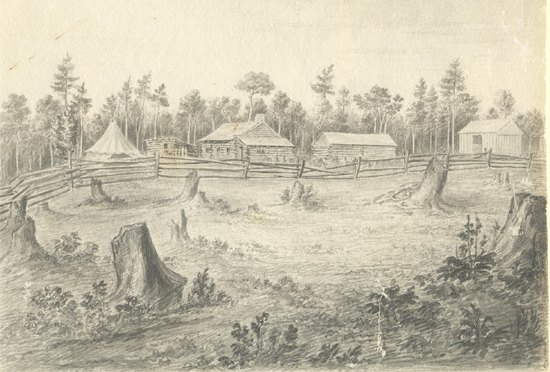
The early settlers who were awarded land grants, had a contractual obligation to build and maintain roads adjacent to their property. I’m imagining where this duty ranked in the list of survival related tasks like build a home, clear the land, or plant a crop.  Removal of trees and stumps was an onerous task in a land thick with timber.

“Pathmasters” were appointed by Upper Canada’s first parliament to oversee road development. Settlers were eventually given the option of paying a fine in lieu of performing road maintenance.

marquee

The next time I hit a bump in the road, I will draw a calming breath and be grateful that I don’t have to fix it!

1337656272988_ORIGINAL

Please leave a comment.  I’d love to hear from you!